01
Two-second films
My earliest memories do not arrive as stories. They are vivid little films: a face, a place, perhaps two seconds of movement. No sound. No smell. No soundtrack. No explanation.
Chapter one · Influences · 1975–1984
Before I could choose the soundtrack, I was learning how to recognise myself inside everybody else’s noise.
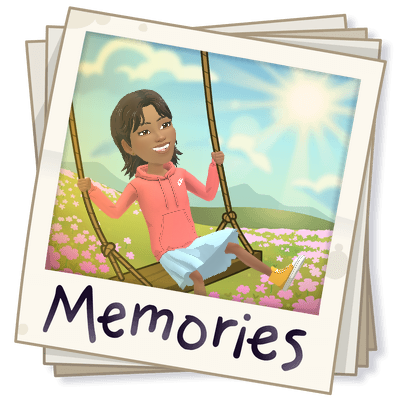
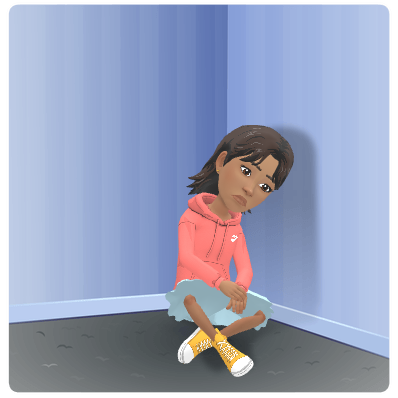
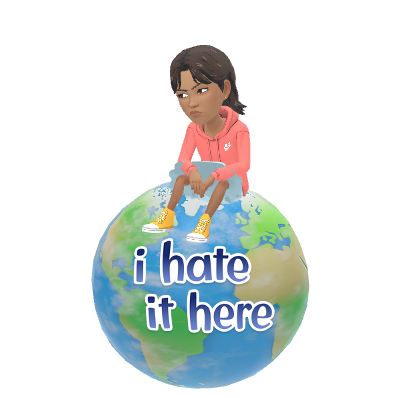
How to read the pictures: the Bitmoji are visual shorthand for ideas, moods and transitions. They are not a literal photographic record.
Content note: this chapter names childhood sexual abuse, neglect and racist bullying, without describing them graphically.
Real-life photographs: Still Ree documents the ways I kept finding room to be myself across many years. It is a thematic companion to BitManga, not an album arranged around the dates of individual chapters.
Part one
01
My earliest memories do not arrive as stories. They are vivid little films: a face, a place, perhaps two seconds of movement. No sound. No smell. No soundtrack. No explanation.
02
I can still see a woman in a brown duffel coat at Gibson Drive. I recognised her face years later and the context was right. My mind had simply filed Dorothy under the label “Helen”. Recognition worked; naming did not.

03
Inside my world, imagination was not separate from memory. I knew I could fly. Later I accepted that I could no longer do it—but for years I still believed I had been able to fly when I was little.

04
The background hum was constant. Nature, animals, making things and being alone felt peaceful. My inner world was vivid, orderly and alive—even when the world around me was not.
Part two
05
My memories became longer. They gained sequence, atmosphere and consequence. I had not suddenly become more alive; my attention had turned outwards. The world was now getting through.
06
An uncle sexually abused me over five years. In Tamworth, bullies made ordinary spaces unsafe too. These were not childhood misunderstandings. Adults caused harm, failed to notice it or chose not to face it.
07
Moving to Birmingham changed the scenery, not the pattern. There were more bullies and more sexual abuse by other members of Mum’s family. None of that was mine to cause, manage or explain away.
08
I climbed too high for the local bullies to follow, then stayed in the tree for hours longer than they thought I could. They were bored as hell. I was having a lovely time. Sometimes escape was also freedom.
Part three
09
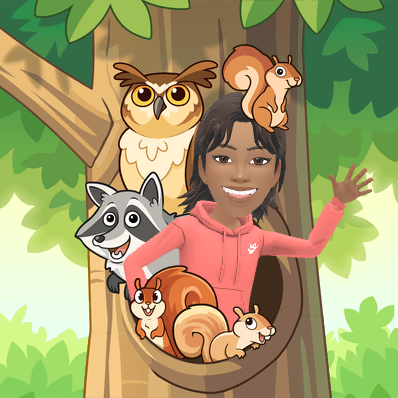
Outside, I could be alone without being lonely. Trees offered height, hiding places and a view. Animals did not demand the correct performance before allowing me to belong.
10
When Mum confiscated my torch, I read by the streetlight. A practical obstacle was not the end of the activity; it was a design problem. Books gave me whole worlds whose rules I could study.
11
Mum did not have all the equipment for the whole job of parenthood. But she was brilliantly creative. On rainy days, saved scraps became peg people, blown eggs became Easter dioramas, and blankets and chairs became dens.
Birthday cakes became ghetto blasters with liquorice tape decks, or dwarf cottages with Cadbury Finger bridges. Little balls of icing pulsed in the microwave like alien eggs, then became quick, crunchy meringues.

12
Brownies extended Mum’s toolkit: DIY, camping, organised games, sweets from the tuck shop and permission to run around outdoors. The skills made it possible to explore further and further from home.
Part four
13
I was navigating a mixed-race identity with language supplied by adults. Until I was around eleven, I called myself “Half caste” because that was what I had been told I was—not because it was a term I created or chose.
14
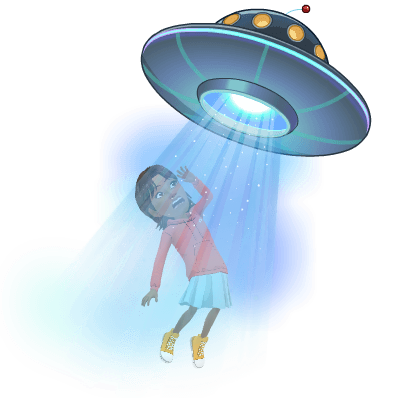
Alien abduction. Fairy changeling. Swapped at the hospital. Kidnapped and replaced by passers-by. Anything that could explain why I seemed so different from my family was worth considering.

15
If extraterrestrials and fairies could not settle the question, astrology might. Humour and imagination let me keep turning the problem around. A strange theory was still more useful than “there is something wrong with you”.
16
I could spend hours setting up a Cindy house and never play with it. Other children voted me teacher when we played schools. I had the best ideas, so games changed when I got bored—before anybody else had time to notice boredom existed.
Part five
17
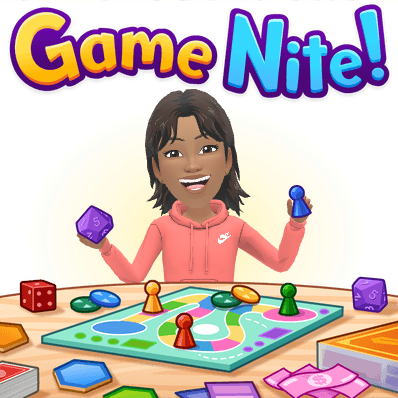
Mum initiated Family Games Night. Every Christmas she bought a new game for me and Simon, so there was always something fresh to swap into the system. Those nights were real happy memories.

18
Mum was undiagnosed autistic and not equipped for every part of parenthood. She also gave me creativity, resourcefulness and joyful ways to make a world from scraps. Understanding her explains part of the landscape; it does not excuse the harm or fill the gaps.

19
I could be lonely and love solitude. I could be imaginative and recognise facts. I could have been harmed and still remember joy. Resilience was not proof that everything was fine; it was evidence that I kept building with what I had.

20
Around ten or eleven, I finally understood that dreams and imagination had become tangled with memory. I had never actually been able to fly. Growing up was full of those small, sad endings.
I did not have to rename harm as love in order to acknowledge love. I did not have to erase happy memories in order to prove the harm happened.
Both things are true.
The sounds around me
Dad’s family brought late-70s and early-80s soul, reggae and Motown. Mum’s side brought mid-century show tunes, Abbott and Costello and wartime patriotic songs. At Nan’s there was horse racing, wrestling and black-and-white cowboy films. At Nan and Grandad’s: cricket, John Wayne and MTV.
This is not a definitive playlist for the era. It is a selection of the music I knew about and heard—the songs that reached my ears. Other people can follow it, or go wherever their own memories and ears take them.
Listen to Influences · 1975–19841985
The threshold
For Christmas I received a ghetto blaster: double tape deck, buttons everywhere, and autonomy over what I listened to and when—at last.
My cousin immediately tried to convert me to Paul Young and The Cure, while Dad’s family and siblings taught me set-piece dances to “Get Down on It” by Kool & the Gang.
Next: Skool Daze · 1985–1992