Chapter six · Troubled Times · Sandwell · 2014–2023

Troubled Times

I arrived in Tipton ready to grow another life. Instead, home became a gauntlet—and the skills I used to survive were repeatedly treated as reasons I did not need support.

advocacyhostile environmentspinal injuryfamily boundariessystems overload
Ree tending a lively garden

How to read the pictures: the Bitmoji are visual shorthand for ideas, moods and transitions. They are not a literal photographic record.

Content note: this chapter discusses racism, harassment, assault, mental-health crisis, family breakdown, arson and police custody.

Real-life photographs: Accessibility Learning Curve follows the practical access story from Carl’s assault in summer 2018 to the present, across the Sandwell properties, caravan and bungalow. It crosses chapter dates rather than belonging to one period.

Property photographs: Manifoldia Grange · 2020 · Boldmere Court

Gardening against gravity

I kept planting anyway

Gardening is DCA in physical form: understand what something needs, alter the environment, provide the right support and let it grow.

But this time, everything I planted existed inside an environment nobody was willing to protect. My neighbour pulled things up. The council minimised the behaviour. Access to the garden gradually became another battle.

This chapter is my account of living through that system. The Public Timeline and controlled Clerical Audit Ledger hold the detailed records; this comic does not replace them.

Part one

Planting into Hostile Ground

I arrived ready for a new start, strengthened my advocacy skills and kept building community—even as the place called home became increasingly hostile.
An eager Ree beneath the words Can't Wait

01

Another new beginning

As with every new start, I arrived in Tipton keen to crack on. An earlier harassment-panel decision had shown that consequences could stop my neighbour’s behaviour: when his tenancy appeared at risk, he left me alone for more than a year.

When the behaviour resumed, that history did not stop the anti-social behaviour team closing the case again.

Ree offering assistance beneath the words How Can I Support You

02

Learning formal advocacy

I volunteered with Citizens Advice, Wolverhampton LGBT and the African Caribbean Community Initiative—ACCI. I wanted to strengthen my advocacy skills, understand the systems and become more useful to people facing barriers.

The cruel irony was that knowing more about how services were supposed to work did not make Sandwell’s services respond properly when I needed them.

Ree celebrating at Pride with rainbow flags

03

Visible without being under attack

I continued attending Pride and finding community beyond the conflict at home. Pride was more than a celebration of sexuality: it was one of the remaining spaces where visibility could still feel joyful rather than dangerous.

Ree smiling while gardening

04

Keep planting

I planted things in the communal garden. My neighbour repeatedly damaged or removed them. I kept trying to communicate with him—and with the SMBC staff responsible for managing the situation.

A person can provide effort, knowledge and care, but growth still depends upon whether the surrounding environment permits it. I kept planting anyway.

Part two

Home Becomes the Gauntlet

My fearless nature was gradually overwhelmed. Everyday access to the bins, garden and outside world became conditional upon somebody else’s mood.
Ree looking frightened beneath the word Scared

05

Fear replaced freedom

I could not go to the bins without risking abuse. Gardening, sitting outside and ordinary movement around my own home became restricted by the risk of harassment or assault.

Family members said it was disgusting and asked why I had not sorted it out yet. When they were harassed themselves, they complained to me—but were generally unwilling to submit complaints in their own names.

A distressed Ree asking Why So Mean

06

Understanding is not excusing

I tried to understand my autistic neighbour and why he behaved as he did. Autism might explain some communication or regulation differences. It did not excuse the racist abuse, harassment or violence I experienced.

I also tried to work with the anti-social behaviour team. My experience was that they closely managed my reactions while repeatedly minimising the behaviour causing them.

Ree hiding inside a cardboard box

07

Recovery became confinement

Time alone had once restored my nervous system. Now it became months hiding indoors because leaving home did not feel safe.

This was not restorative solitude. It was enforced isolation, loss of access to my garden and outdoor life, and eventually vitamin-D-deficiency levels of indoor existence.

Ree shouting into a megaphone beneath the word Complain

08

Passed between systems

I approached every organisation and escalation route I could identify, including a community trigger. I supplied evidence on a memory stick, only for the person receiving it to decline to review it.

Mental-health services recorded the neighbour problems, framed my distress through a personality-disorder explanation, then said the underlying issues were social and sent me back to the council.

neighbour → council → mental health → council → repeat

Part three

Evidence, Boundaries and Burnout

I learned the rules, protected the children and drew overdue family boundaries. Knowledge helped me describe the problem; it could not make other people act.
Ree studying among stacks of books

09

Knowing the rules was not enough

Through volunteering and necessity, I learned complaints, policy, evidence, escalation and community-trigger routes.

But knowledge could not make another person review the evidence or take responsibility. I was increasingly expected to operate an entire case-management system while living inside the harm it was meant to address.

Ree reaching out beneath the words Let Me Love You

10

Then the children entered the conflict

In summer 2017, my neighbour’s behaviour extended to my young nephews. After he snatched a toy from the youngest and threw it into a bin, I retaliated by throwing his bric-a-brac from the landing into the bins.

I reacted in anger and accepted responsibility for that reaction. The institutional answer was an exchange of apology letters. The boys remained frightened of “the bad man”.

A displeased Ree beneath the words Current Mood

11

The shoes were the final straw

Simon borrowed my shoes for his son, then redirected me to my teenage nephew when I asked for them back and added abuse when challenged.

I told him he could keep the shoes—and having a sister. It was the point at which a long pattern of taking my possessions, labour and support for granted became more expensive than walking away. Relationships with the children became collateral in the adults’ recurring break-ups and disputes.

Ree laughing in a pile of colourful autumn leaves

12

Burnout has seasons

Burnout was not one sudden collapse. It accumulated across years and seasons while I kept working, learning the rules, submitting evidence and trying to preserve small pieces of joy.

Nature could still help me regulate. A bright day, a pile of leaves or time outdoors was not denial of the trouble—it was part of how I survived it. But the danger, administration and institutional resistance always followed me home.

Part four

Adapted by Ree, Not the System

The injury changed my mobility. The wheelchair entered the visible story in 2020, but the expectation that I would solve everything continued unchanged.
An overwhelmed Ree beneath the words Up to Here

13

Everybody asked why I had not sorted it

Family and friends were appalled by what was happening, but mostly responded by telling me to call the same organisations I had already contacted repeatedly.

I was expected to remain my own advocate, case manager, evidence officer and crisis service while living inside the problem. People became tired of hearing about Sandwell without becoming willing to help me overcome Sandwell’s barriers.

An injured Ree beneath the word Ouch

14

The injury was not recognised as spinal

An assault by my neighbour caused injuries, but the symptoms first appeared through my left leg rather than being understood as coming from my spine.

It took more than a year for the spinal-cord injury to be identified. That delay affected the treatment, support and adaptations that followed.

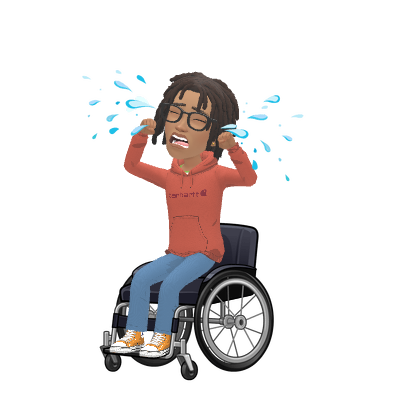
Ree crying while seated in a wheelchair

15

The wheelchair enters the story

The wheelchair became part of the visible map in 2020. It did not arrive as defeat; it arrived as a tool my body now needed. But it also made the barriers in my environment impossible to disguise.

I was grieving lost mobility while still being expected to manage the neighbour, the complaints, the family, the paperwork and everybody else’s reactions. The visible equipment changed. The expectation that Ree would sort everything did not.

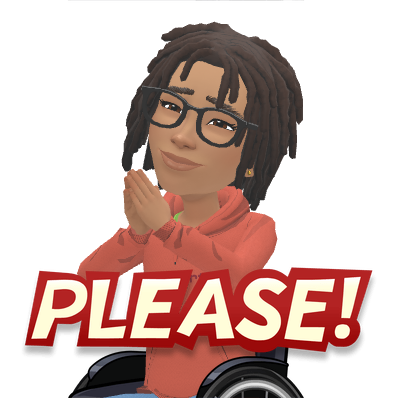
Ree pleading beneath the word Please

16

Still asking for basic access

Across two properties, and three years after the spinal-cord-injury identification, I was still pleading with SMBC for essential aids and adaptations.

A bungalow was not automatically accessible—or safe. When West Midlands Fire Service inspected the kitchen in October 2022, before I started working at Michael Page, they described it as a fire hazard. The kitchen remained unsafe enough that carers came to cook for me three times a day.

The wet room was also unsafe. The toilet frame was loose and frequently tipped over. Initially, there was no suitable shower seat. The large chair eventually provided blocked wheelchair access to the sink and made it difficult to fit my wheelchair into the room while showering.

For five years, I relied on workarounds. The floor flooded after every shower until July 2026, when SMBC finally dug it down sufficiently to contain the water. That late correction addressed one defect; it did not resolve the kitchen, wet-room, wheelchair-access and wider adaptation failures. The outstanding issues remain, and the bungalow remains uninhabitable.

These were not preferences or requests for an ideal home. They were basic fire, hygiene, transfer and wheelchair-access requirements.

Nearly seven years after my spinal-cord injury was identified, I am still asking the NHS and council for basic aids and adaptations. That is not a typical delay. The traumatic nature of the injury, its preventability in my account and the difficulty obtaining legal support created another major barrier. Mum is now paying for solicitors to help pursue the unresolved benefit entitlement and the back payment I believe I am due.


Part five

Loss, Forms, Fire and Cells

I kept a full-time job, managed multiple care visits, paid for unmet needs and carried the administration created by every service failure—until I could not contain it any longer.
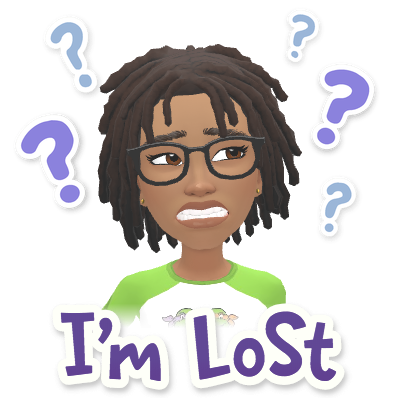
A sad Ree beneath the word Lost

17

Support still travelled mostly one way

A dispute involving a redeemed £10 gift card and control of my Xbox account became the final example of an old family rule: my time, money, accounts and practical help were communal when other people wanted them, but my boundaries were treated as the problem.

After more than forty years of supporting my sister, I withdrew from a relationship that was not mutually supportive. I lost contact with people I loved, but regained time, money and energy. Mum continued showing up in the ways she could, although advocacy was not something she could provide. When I became too depleted to keep helping her, she seemed to age twenty years in two—and that frightened me.

A frustrated Ree in a wheelchair surrounded by flying forms, notebooks and a computer

18

Buried under the forms

I was working full time, receiving carers three or four times a day, paying privately where the care plan did not meet my needs, and continuing to pursue aids and adaptations for a home that still did not work.

Access to Work could fund four hours of weekly paperwork help. I asked my sister to take on that paid work; she declined without considering it. Every unmet need generated another form, call, complaint, assessment or piece of evidence. Services created the administrative burden, then treated my difficulty carrying it as a problem inside me.

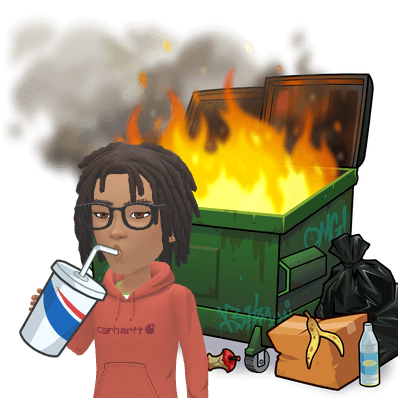
Ree standing before flames beneath the word Arson

19

Regulated enough to be abandoned

I spent approximately 48 hours in A&E waiting for a crisis bed. Because I remained outwardly regulated, staff decided that mental health was not the problem.

The survival skill that allowed me to communicate through crisis became the reason crisis support was withheld.

By that stage, my addled brain had reduced an impossible situation to one brutally simple—but false—solution: if the unsafe kitchen no longer existed, the need for carers to enter my home three times every day would disappear with it.

I could not live like that for one more day.

The breakdown ended in arson.

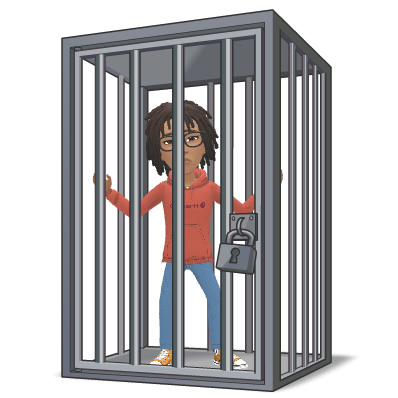
Ree looking through the bars of a police cell beneath the words In Jail

20

Detained without a safe release route

Before this arrest, I had reported four assaults, a death threat and a further assault by my neighbour without receiving the protection I needed. Police then arrested me over an angry email.

In custody, officers said they needed an address before they could release me on bail. I explained that I was homeless, but they continued to insist upon an address. They contacted Dad because his was the only family home that might have been physically accessible. He declined to accommodate me.

Police said they could not release me to the bungalow because my mental-health vulnerability made it unsafe. Then they released me to the bungalow anyway.

There was no meaningful follow-up. When I attempted to report the actions of staff at the temporary accommodation, police declined to take that report.

The system could arrest and detain me, but it did not provide a safe release destination, investigate what followed or coordinate the support it had already identified as necessary.

violence reported without protection → unsafe home → crisis support withheld → crisis-distorted reasoning → arson → arrest → no accessible bail address → acknowledged vulnerability → release back to the bungalow → no follow-up

The contemporary records describe mental-health crisis. They did not identify AuDHD, cumulative nervous-system overload or the environmental failures that ReeOS would later help me map.

The Troubled Times soundtrack

The music that reached me · 2014–2023

These are the songs that reached me while home became hostile, advocacy became survival, mobility changed and the systems around me demanded more capacity than one nervous system could produce.

Follow my selection, or let your own memories and ears take you elsewhere.

Listen to Troubled Times · 2014–2023

2023

The story does not end in the cells

The evidence became an operating manual.

I entered Tipton ready to plant. I reached the end of this chapter with a spinal injury, a wheelchair, an inaccessible bungalow, fractured family relationships and a night in police custody.

But I also carried the evidence, systems knowledge and hard-won boundaries that would become ReeOS, DCA and the route into recovery.

Next: Cornwall Healing · September 2023–February 2025