Chapter seven · Cornwall Healing · September 2023–February 2025

Cornwall Healing

Cornwall gave me enough safety, autonomy and outdoor time to begin recovering—but I had to work myself into exhaustion to keep paying for that healing environment.

outside regulationautonomyMumLeesaself-funded safety
An overwhelmed Ree trying to clear cobwebs from her brain

How to read the pictures: the Bitmoji are visual shorthand for ideas, moods and transitions. They are not a literal photographic record.

Content note: this chapter discusses the aftermath of mental-health crisis, housing insecurity, financial pressure, pet illness, euthanasia and grief.

Real-life photographs: the caravan and bungalow sit within my cross-chapter Accessibility Learning Curve , which runs from summer 2018 to the present.

Cobweb brain

Follow the road until the brain returns

After the arson, crisis and custody, I could not force my brain through another fixed plan. I drove towards Cornwall over several days, slept in the car when tired and stopped to rest or explore whenever my body asked.

I stayed outside almost continuously. The bungalow had supplied enough indoor time for one lifetime.

Cornwall did not remove the systems causing the harm. It changed enough of the inputs—space, movement, autonomy, coast and time—for my nervous system to begin coming back online.

Part one

Follow the Road Until the Brain Returns

I left without forcing a direct route or an artificial deadline. The journey itself became the first recovery system.
Ree prioritising mental health beneath the words Mental Health First

01

What my nervous system needed first

The immediate requirement was not another room, appointment or instruction to calm down. I needed movement, outside air, autonomy and freedom from people entering my space.

Those were not luxuries added after treatment. They were the conditions that allowed my brain to begin functioning again.

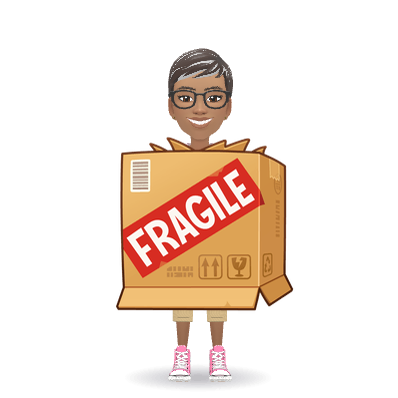
A delicate-looking Ree beside the word Fragile

02

Driving without forcing an arrival

I took several days to reach Cornwall, sleeping in the car when tired and pulling over to rest or explore whenever the impulse arrived.

This was not aimless wandering. It was self-paced regulation: movement when I could move, stillness when I needed to stop, and no punishment for taking the long route.

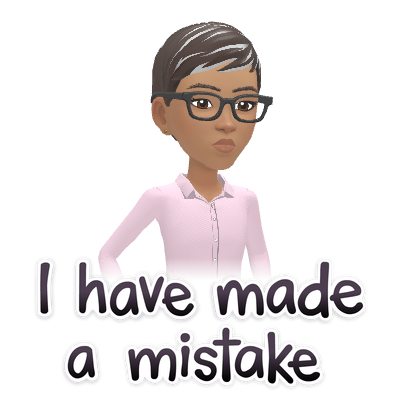
A worried Ree beneath the words I Have Made a Mistake

03

The aftermath travelled too

The road did not erase the arson, custody, fear or uncertainty. There were moments of questioning what had happened, what I had done and whether leaving without a fixed plan was another mistake.

But returning immediately to the bungalow would have returned me to the conditions that produced the crisis. The uncertain road was safer than the known environment.

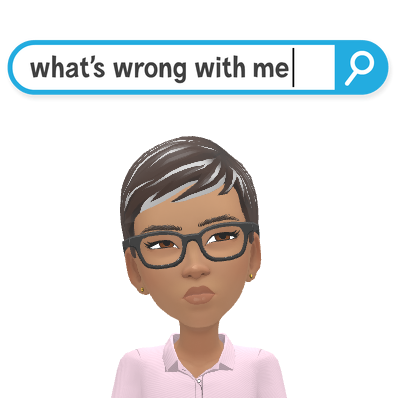
A confused Ree asking What's Wrong With Me

04

Changing the question

Services had spent years locating the problem inside me: personality, mental health, anger and failure to cope.

Cornwall introduced a better question: what happens to a nervous system after years adapting to danger, intrusion, confinement and impossible demands?

Part two

Outside Is Treatment Too

Gentle walks, coastlines and a temporary caravan gave me regulation without appointments, performance targets or people entering my home.
Ree enjoying a gentle walk

05

Land’s End, then follow curiosity

I reached Land’s End around day three, then explored Penzance, Mousehole, the Minack Theatre and the coast around the Lizard.

Gentle beach walks were not exercise targets. They were regulation without pressure: look, move, rest and let the landscape supply the next instruction.

An apologetic Ree beneath the words I'm Sorry

06

Trauma acknowledged, treatment declined

Mental-health services said I had trauma but could not offer therapy because the trauma remained ongoing and treatment would therefore be ineffective.

The proposed solution was to call the council and resolve the social problems causing it—the same council system I had already been unable to make act.

Ree settling into caravan life beneath the words This Is My Life Now

07

A static caravan becomes the office

I kept being drawn back to the Lizard, so I booked a static caravan and worked from there for several weeks.

For the first time in a long while, home, work and regulation could coexist without the daily threat and intrusion attached to the bungalow.

Ree celebrating Mum saying yes

08

Mum said yes to the caravan

Mum came to Cornwall several times and supported me in the ways she could. She even slept in the car to understand how I was living.

We tried glamping but left after one chilly night. I had slept in all my clothes, including my coat, and we agreed that the car was warmer than the tent. This was support through participation—not advice delivered from a safe distance.

In October 2023, Mum said yes to helping me buy a touring caravan, and we made the purchase. That yes changed the system from repeated emergency improvisation into a home we could arrange around what I actually needed.

Part three

A Life with a Working Rhythm

Recovery did not mean doing nothing. It meant having enough control over the environment, timing and intensity of what I did.
Ree watching a sunset over the coast

09

I parked for the sun, not the hose

By Christmas, I had developed a sustainable rhythm: wake, walk around the campsite, work until lunch, take a short drive or ramble, work again, then explore another beach or cove when energy and fuel allowed.

My caravan was aligned with the sun’s journey across the sky, so I could watch sunrise and sunset comfortably each day. It was not necessarily aligned with the official pitch, because sunrise does not care where the water hose is. The landscape provided the transitions that the bungalow had removed.

Ree and Mum raising glasses beneath the word Cheers

10

Cheers to a system that worked

The caravan gave me a safe space to work, eat and live. A motor mover made it possible for me to position it. The solar panel, extra leisure battery, water hook-up and device battery backup made me largely self-contained—and meant I could still work off-grid.

Where a campsite lacked electric hook-up, the backup held enough power for a working day and could recharge in the car during the next drive. I still used workarounds: sometimes I paid £3 to shower at the leisure centre instead of heating water for a fast, chilly caravan shower. I used accessible campsite facilities where they worked and negotiated a discount for not using them where they did not.

I paid £500 per month while living in the caravan. Once I no longer needed it as my home, Mum and I planned to split the payments and use, with friends and family potentially renting it to help cover costs.

In hindsight, buying the sparkly new caravan was a mistake. The second-hand one we viewed would probably have been fine, but it did not have a motor mover. We were traumatised and needed a solution I could actually use; the new caravan arrived with everything I needed to get started, and I could adapt its interior discreetly.

My salary was £27,000 per annum. I also received about £330 through PIP and had the mobility car. With my wider expenses reduced after I stopped supplementing other family households through food, childcare and practical support, the £500 monthly caravan payment was manageable.

A cheerful Ree celebrating a healthy and happy New Year

11

Improvement was visible—and measured

Sandwell NHS had not provided the physiotherapy intervention I needed. Between 2020 and 2026, I received no practical physiotherapy support through the Sandwell route involving Trish Edwards. In Cornwall, I found Peter at Helston Community Hospital.

From February 2024, Peter helped me obtain an ankle splint that stabilised my left foot. Walking suddenly became much easier. The improvement was visible in photographs from beaches, hills, coves and woods—and measurable in the distances and terrain I could manage.

Recovery was not an empty schedule. It was daily life arranged so that activity generated capacity instead of consuming every remaining scrap of it.

Ree offering love and support

12

Leesa helped me get back on my feet

I fostered Leesa from February 2024 until Easter. She gave me the courage to face fears such as walking in the dark. On moonless and moonlit nights, we trudged up and down my friend’s farm track, building my confidence, walking ability and core strength together.

I taught Leesa to run safely beside my TriRide and even to jump into a cushion-lined box on my trailer for a country-lane ride to the beach. For her first two weeks with me, she was tethered to me whenever we left the caravan. Once she knew that I was her human, the box was her ride and I carried water, treats and sometimes a bone, we could explore more freely.

While I volunteered at Redwing Gallery, Leesa would sit beneath my desk gnawing a bone, then wander around giving visitors and volunteers sad eyes—as though her bone-carrying, treat-holding human never fed her. She was loved by my community as much as she was loved by me.

When her aggressive cancer progressed, the woman I was dating helped lift her onto the sofa after jumping became too difficult. The vet suggested pregabalin—the same pain medicine I was taking—and explained that the cancer was too aggressive to treat and that Leesa probably had less than two weeks.

I had already stopped at her favourite beach before the appointment because I suspected it might be her last day. I called her owners, who agreed that euthanasia was in her best interests.

I felt like an absolute shit and cried for days. But loving her meant choosing a peaceful ending rather than making her endure more pain. I wish we had longer.

I would love another dog. But the bungalow’s garden steps, absent kitchen and unsafe shower make caring for one too difficult for now. Wanting a dog is not the same as having a safe environment for one.

Part four

Healing Has Running Costs

The environment was working—but maintaining it required wages, extra labour and an exhausting amount of administrative improvisation.
Ree working hard beneath the words Doing My Best

13

Recovery still had a day job

I continued working and volunteering while recovering. I made friends too, although unresolved problems make friendship maintenance difficult: every “How are you?” eventually receives the same boring answer—things are still the same.

The environment made work more sustainable. It did not remove the housing case, benefit administration, hearings or financial responsibilities.

An exasperated Ree beneath the words Haven't You Solved That Yet

14

Six to eight weeks becomes eighteen months

The bungalow work was supposed to take six to eight weeks. SMBC waited until the week of my first hearing—approximately eighteen months later—to remove the kitchen.

After that came repeated inspections of the kitchen electrics, ramp and other problems instead of completed work. A new housing manager said they did not understand why matters were not progressing as expected. Family members continued asking why I had not sorted it.

Everybody could see that the system was not working. Responsibility for making it work still returned to me.
A grateful Ree beneath the words Why Thank You

15

The people who actually helped

I am enormously grateful for the neighbours, strangers and Cornwall acquaintances whose practical kindness helped me survive. I am especially grateful for Mum, who kept learning, travelling, listening and adapting alongside me.

I was not unsupported by everybody. I was unsupported by too many people and systems that formally claimed responsibility.

Ree looking worried beside an empty purse beneath the word Broke

16

Twenty per cent gone overnight

At Easter 2024, I had to reduce my Michael Page hours to four days a week. Twenty per cent of my salary disappeared overnight.

DWP then sent the housing payments intended for my Cornwall accommodation to SMBC for six months. Each time I asked for the payments to come to me and supplied campsite receipts, my case was closed rather than the missing housing support being traced.

I had been promised transitional protection when I moved from ESA to Universal Credit so I could take the Michael Page job. No DWP agent I dealt with honoured that promise.

After work, I tracked down free pallets, took them to the workshop or caravan, dismantled them, built upcycled planters and sold them to raise rent money.

It was clever, practical and exhausting. The healing environment was being funded by consuming the energy it was meant to restore.

In November 2024, redundancy removed the remaining stable income beneath the entire arrangement.

Part five

The Route Back to Sandwell

Cornwall had worked as a recovery environment. Redundancy, redirected support and an inaccurate housing account made it impossible to sustain.
Ree asking for help

17

Asking for help in public

I set up a GoFundMe because the gap could no longer be bridged privately. Mum and a couple of aunts donated, but relatives did not share it with friends or the wider family. After that, the only continuing family donations came from Mum. ❤️

An advocate from Aspire continued helping me pursue the SMBC housing, Housing Ombudsman and Social Care Ombudsman strands. This was the kind of help I needed: somebody willing to stay with the paperwork and the organisations rather than simply telling me to call the council again.

The GoFundMe was not a lifestyle subsidy. It was an attempt to sustain safe, self-funded accommodation while statutory support remained misdirected or absent.

Ree holding up her hand beneath the word Stop

18

I tried to make Cornwall home

I applied to Cornwall for housing because I wanted to stop the Sandwell failures reaching into every part of my life. I hoped a fresh start and a resolved housing situation would give me enough stability to unravel the SMBC case without continuing to live inside it.

I was working and volunteering locally and making a difference through Newquay Orchard. I helped turn a donated summerhouse “Meccano set” back into a solid breakout room for neurodivergent learners and contributed to the Orchard’s digital programme.

I wanted to stay and continue. Without help securing suitable housing, I had to leave the county instead. Cornwall had not failed as a recovery environment; the support system had failed to make that recovery sustainable.

A frustrated Ree beneath the word Lies

19

Two accessible homes that were never offered

SMBC told Cornwall that I had been offered two accessible homes. My position is that neither offer had actually been made. Elizabeth Deegan corrected that account, but her correction was ignored.

During a two-hour meeting with James McLaughlin, I unpicked the statements and set out my case against SMBC.

What followed left me wondering whether mental-health framing was being used to derail the housing case I had just laid out. That is my interpretation of the pattern—not an independently established finding.

Ree giving a poor review beneath the words Would Not Recommend

20

Back to Manifoldia Grange

In February 2025, the Cornwall arrangement ended and I returned to Sandwell, moving into Manifoldia Grange for the second time.

I did not return because the bungalow had become accessible or because SMBC had supplied either of the two homes described to Cornwall. I returned because redundancy and the benefit failures made my self-funded alternative unsustainable.

Cornwall helped me find my brain again. I returned knowing more about what that brain needed—and far less willing to accept somebody else’s inaccurate version of me.

The Cornwall Healing soundtrack

Recovery happened alongside the problems

These are the songs that reached me while I followed the road to Cornwall, learned to live outside, worked from a caravan and slowly rebuilt a daily rhythm.

Follow my selection, or let your own memories and ears take you elsewhere.

Listen to Recovery

2025

The route returns to Sandwell

Recovery now needed a map and a voice.

Cornwall gave my nervous system room to return. It could not provide a permanent answer to housing, care and benefit systems that remained unresolved elsewhere.

The next chapter begins at Manifoldia Grange, passes through an autistic bolt to Scotland and returns to the still-uninhabitable bungalow—where eighteen months of evidence becomes a map for fighting back.

Next: Present Recovery · Coming Out Fighting